0
Sale!

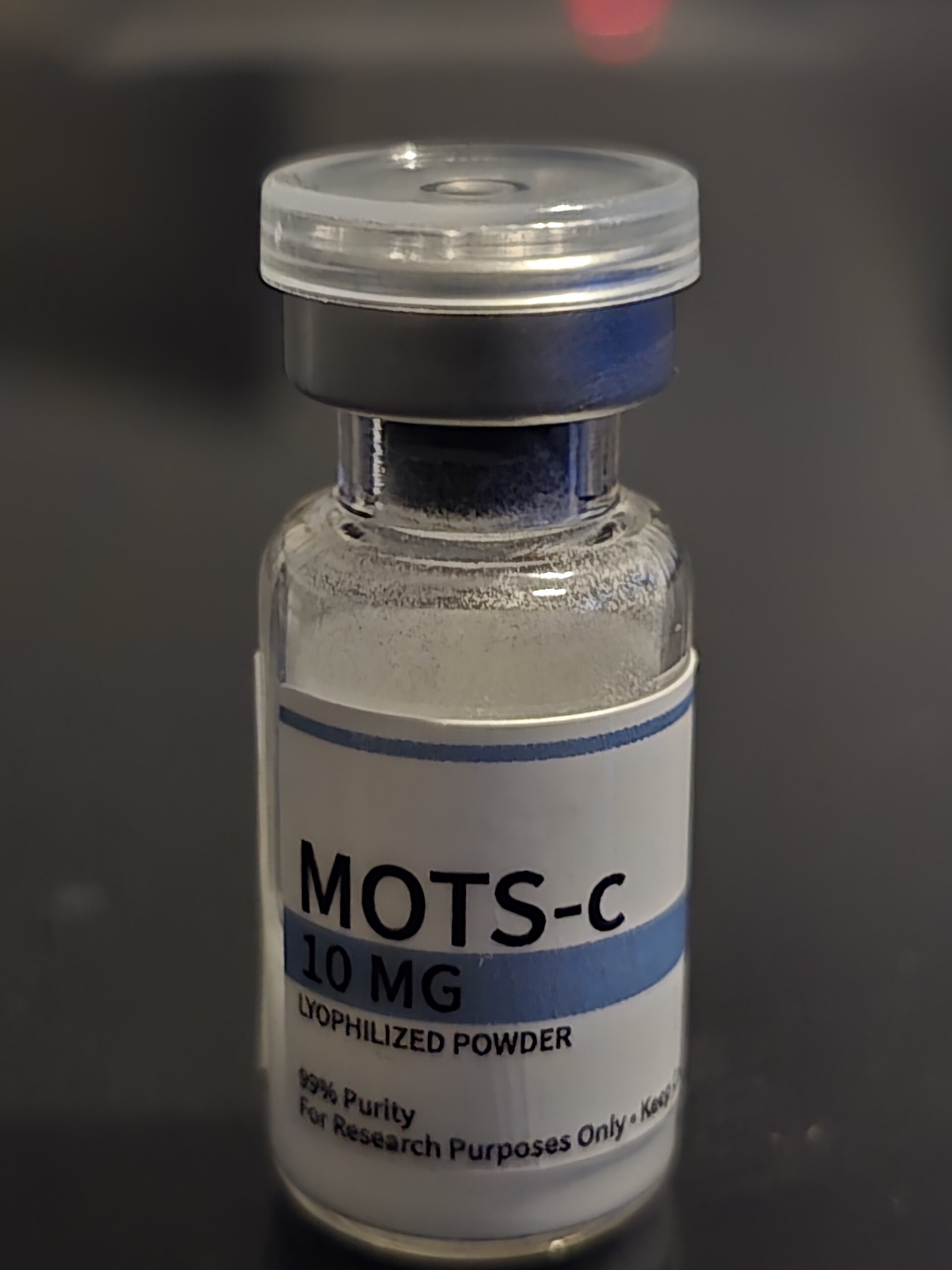
ZentraBio™ MOTS-c – 10 mg
Original price was: €40.00.€28.00Current price is: €28.00.
Description
MOTS-c by ZentraBio — 10 mg Vial (Research Material)
Product Overview
MOTS-c by ZentraBio is a high-purity, research-grade preparation of the mitochondrial-derived peptide MOTS-c (mitochondrial open-reading-frame of the 12S rRNA type-c). MOTS-c is widely studied as a mitochondria-to-nucleus signaling peptide involved in cellular stress adaptation and metabolic regulation, with strong preclinical evidence in models of insulin resistance and diet-induced metabolic dysfunction. (PubMed)
⚠️ For research use only. Not for human or veterinary use.
Key Features
- Active compound: MOTS-c 10 mg (per vial)
- Format: Lyophilized research material (vial)
- Suggested research protocol: Defined by your institutional protocol and study design (no clinical dosing guidance is provided here)
- Mechanistic profile: Mitochondrial-encoded peptide implicated in Folate–AICAR–AMPK signaling, nuclear gene regulation under stress, and metabolic homeostasis pathways (PMC)
- Supplier: ZentraBio (research labeling and traceability intended for laboratory use)
Scientific Background — What MOTS-c Is
MOTS-c is part of a broader class of mitochondrial-derived peptides (MDPs) encoded within the mitochondrial genome. Rather than functioning like a classical endocrine hormone alone, MOTS-c acts as a retrograde signal, enabling mitochondria to influence nuclear gene expression and cellular metabolism during stress.
References:
-
Kim KH et al., Trends in Endocrinology & Metabolism, 2017
https://pubmed.ncbi.nlm.nih.gov/28668303/ -
Cobb LJ et al., Journal of Molecular Endocrinology, 2016
https://pubmed.ncbi.nlm.nih.gov/27107601/
A foundational study demonstrated that MOTS-c administration in mice:
-
Prevented age-dependent insulin resistance
-
Protected against high-fat diet–induced metabolic dysfunction
-
Reduced diet-induced obesity phenotypes
Reference:
-
Lee C et al., Cell Metabolism, 2015
https://pubmed.ncbi.nlm.nih.gov/26000750/
Mechanistic Profile (Physiology-First, Research Context)
1) Folate–AICAR–AMPK Axis (Core Mechanistic Theme)
MOTS-c has been shown to interfere with the folate cycle, leading to accumulation of AICAR, a known AMPK activator, thereby linking mitochondrial stress signaling to systemic energy regulation.
References:
-
Lee C et al., Cell Metabolism, 2015
https://pubmed.ncbi.nlm.nih.gov/26000750/ -
Kim SJ et al., Frontiers in Endocrinology, 2018
https://www.ncbi.nlm.nih.gov/pmc/articles/PMC6106948/
2) Exercise-Associated Biology & Stress Adaptation
MOTS-c levels increase in response to exercise and metabolic stress, and experimental administration in mice has been reported to improve physical performance and metabolic adaptation.
References:
-
Reynolds JC et al., Nature Communications, 2021
https://www.ncbi.nlm.nih.gov/pmc/articles/PMC8223490/ -
Kim KH et al., Trends in Endocrinology & Metabolism, 2017
https://pubmed.ncbi.nlm.nih.gov/28668303/
3) Metabolic Homeostasis in Preclinical Models
Across rodent and cellular models, MOTS-c has been reported to:
-
Improve insulin sensitivity
-
Enhance glucose uptake
-
Reduce lipid accumulation
-
Modulate inflammatory signaling associated with metabolic disease
References:
-
Lee C et al., Cell Metabolism, 2015
https://pubmed.ncbi.nlm.nih.gov/26000750/ -
Lu H et al., Aging Cell, 2019
https://pubmed.ncbi.nlm.nih.gov/30791224/
Human Data — What Exists vs What’s Assumed
What exists (observational / biomarker-level)
Human studies primarily examine circulating MOTS-c concentrations and their association with metabolic markers.
One observational study reported that plasma MOTS-c levels were not significantly different between lean and obese individuals, but associations with insulin resistance indices were context-dependent.
Reference:
-
Du C et al., Frontiers in Endocrinology, 2019
https://www.ncbi.nlm.nih.gov/pmc/articles/PMC6742707/
What does not exist
-
No randomized controlled trials demonstrating disease prevention
-
No approved pharmaceutical formulations
-
No validated clinical dosing guidelines
This distinction is critical when interpreting online claims.
Research Highlights — Why Laboratories Study MOTS-c
MOTS-c is investigated for:
-
Insulin resistance & metabolic dysfunction
https://pubmed.ncbi.nlm.nih.gov/26000750/ -
Exercise-mimetic & performance biology
https://www.ncbi.nlm.nih.gov/pmc/articles/PMC8223490/ -
Mitochondria-to-nucleus signaling
https://pubmed.ncbi.nlm.nih.gov/27107601/ -
Inflammation–metabolism interface
https://www.ncbi.nlm.nih.gov/pmc/articles/PMC6106948/
Research-Context Dosage Ranges (Educational Reference Only)
⚠️ Educational context only — not clinical guidance
Reported experimental and anecdotal research-use ranges discussed in the literature and laboratory forums:
-
Exploratory range: ~100–250 mcg
-
Common research range: ~250–500 mcg
-
Upper experimental range (reported, not established): ~500–1,000 mcg
Notes:
-
Human dose-response data are not established
-
Effects appear highly context-dependent
-
Chronic exposure has unknown long-term consequences
Handling & Storage (Laboratory Guidance)
-
Store refrigerated per institutional SOP
-
Protect from light and heat
-
Avoid repeated temperature cycling
-
Follow validated sterility and stability procedures for reconstitution
Safety & Regulatory Disclaimer
MOTS-c by ZentraBio is supplied solely for laboratory research purposes.
It is not intended for human consumption, diagnosis, treatment, or prevention of disease. Handle according to GLP/GMP-adjacent laboratory standards, including PPE, documentation, and controlled access.
Final Perspective
MOTS-c is best understood as a mitochondrial stress-response signaling peptide with:
-
Strong mechanistic rationale
-
Robust preclinical metabolic data
-
Early but limited human biomarker evidence
The scientifically responsible position is to treat MOTS-c as a research tool for studying metabolic resilience, stress adaptation, and age-associated metabolic decline, while remaining explicit about the current limits of human outcome data.
Related products
-
Sale!
ZentraBio™ Retatrutide – 10 mg Vial
Original price was: €119.00.€84.00Current price is: €84.00. Add to cart Compare -
Sale!

Wegovy 4 mg by GenPep
Original price was: €138.00.€105.00Current price is: €105.00. Add to cart Compare -
Sale!
ZentraBio™ – TB-500 – 10 mg
Original price was: €66.00.€36.00Current price is: €36.00. Add to cart Compare -
Sale!
ZentraBio™ Retatrutide – 4 x 5 mg Vial
Original price was: €208.00.€173.00Current price is: €173.00. Add to cart Compare
Reviews
There are no reviews yet.